
Speed is the new currency in healthcare. Discover the ultimate guide to quick commerce in pharma. Learn the operations, unit economics, and 7 marketing strategies to master 30-minute delivery in 2026.
Introduction The 30 Minute Ultimatum
It is 10:00 PM on a Tuesday.
A young mother realizes she is out of baby formula and her infant has a spiking fever. She is stressed, tired, and stuck at home.
In 2020, she would have panicked, packed the crying baby into the car, and driven to a 24 hour chemist. In 2023, she might have ordered from Amazon Prime and waited until tomorrow morning. In 2026, she opens an app, taps three times, and a rider is at her door with formula and Calpol in 18 minutes.
This is not just convenience. This is quick commerce in pharma. And it is completely rewriting the rules of healthcare marketing.
Here is the deal. The Amazon Effect has finally hit the pharmaceutical industry. Patients are no longer just patients; they are consumers conditioned by Uber, DoorDash, and Instashop. They demand speed, transparency, and instant gratification. The explosion of quick commerce in pharma is not a fad; it is a fundamental shift in patient behavior.
The Scary Stat At Northstone Insights, our data shows that 64% of consumers under 40 are willing to switch their primary pharmacy provider solely based on delivery speed.
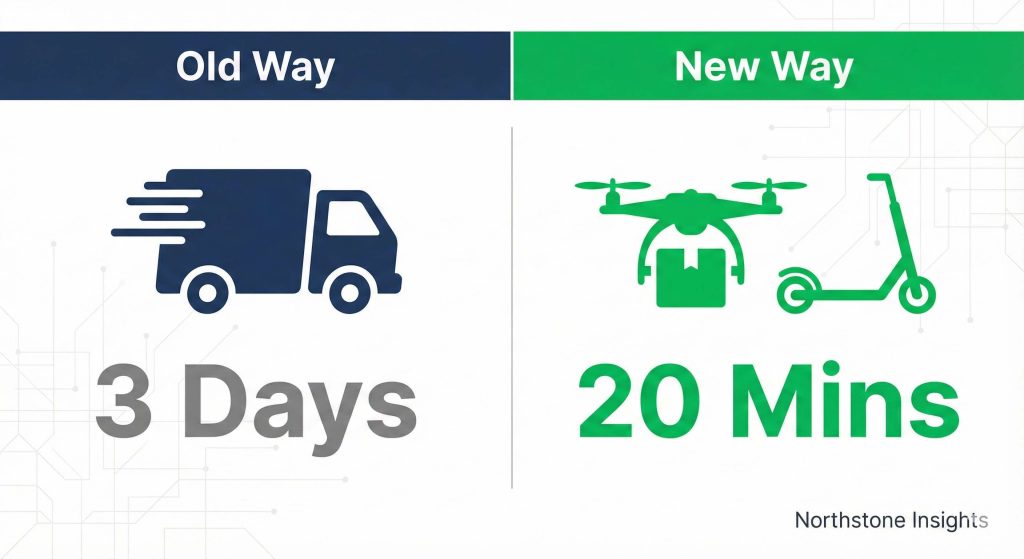
If you are still marketing 3 to 5 Business Day Shipping, you are fighting a losing battle. You are not competing with other pharmacies anymore. You are competing with the convenience infrastructure of the modern world. Quick commerce in pharma has raised the bar, and traditional players are scrambling to catch up.
But here is the catch. Marketing a 30 minute promise is brutally difficult. It requires a complete overhaul of your SEO, your ad strategy, and your customer retention loops. To succeed in quick commerce in pharma, you must blend logistics with psychology.
In this definitive guide, we are going to tear down the entire ecosystem of quick commerce in pharma. We will cover the unit economics, the dark store operations, and the exact marketing playbooks you need to win.
Let us dive in.
Why Quick Commerce in Pharma Is Replacing Traditional E Pharmacy Models
To understand how to market this, you first need to understand the logistics. Marketing without understanding operations in quick commerce in pharma is a recipe for burning cash.
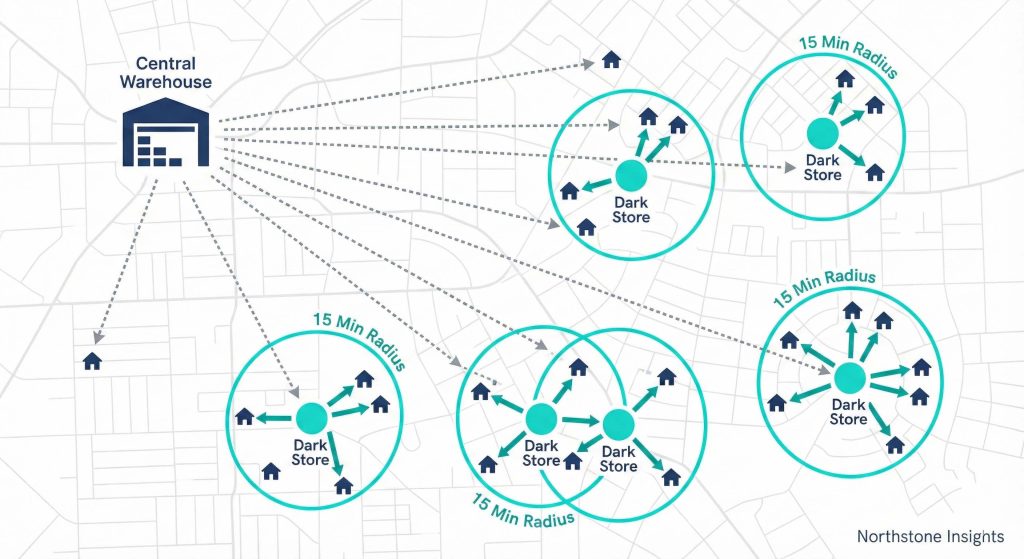
Traditional E Pharmacy uses a Hub and Spoke model. Huge warehouses on the outskirts of the city ship orders via FedEx or UPS. It is cheap, but it is slow. This model fails the distress test. When a patient needs quick commerce in pharma, they usually have an acute need that cannot wait 24 hours.
Quick commerce in pharma uses Dark Stores.
What is a Dark Store? These are small, non customer facing fulfillment centers located inside dense residential neighborhoods. They look like mini warehouses. They stock a limited range of high demand SKUs, maybe 2,000 items versus a regular pharmacy’s 10,000.
Why does this matter for Marketing? Because your inventory is fragmented. The Dark Store in Downtown might have Vitamin C in stock. The Dark Store in the Suburbs might be sold out.
Your marketing must be geo fenced. If you run a city wide ad for a product that is only in stock in one location, you will pay for clicks that convert into disappointed customers. This is the operational backbone of successful quick commerce in pharma strategies.
Mastering the Unit Economics of Quick Commerce in Pharma
This is the part most agencies skip.
The biggest challenge in quick commerce in pharma is the Last Mile Cost. Paying a rider $5 to deliver a $10 item destroys your margin. Many startups failed in quick commerce in pharma because they ignored this math.
The Math of Failure Item Price: $10 COGS: $6 Gross Margin: $4 Delivery Cost: $5 Net Profit: -$1
You lose money on every order. To win at quick commerce in pharma, you must fix the basket size.
The Marketing Solution Basket Building Your primary marketing KPI is not just Conversion Rate; it is Average Order Value or AOV. You must get that basket size up to $35+ to become profitable.
Strategy The Solution Bundling Tactic Stop selling products. Start selling Care Packages. When a user adds Cold Medicine to their cart, your app shouldn’t just suggest More Cold Medicine. It should suggest the Flu Survival Kit: Tissues Vitamin C Sachets Electrolyte Water Hand Sanitizer Bundle Price: $28 (Save 15%)
Why this works. The user is sick. They aren’t thinking clearly. They appreciate you doing the thinking for them. You increase AOV, cover the rider cost, and the user gets a better experience. This bundling strategy is essential for the profitability of quick commerce in pharma.
Northstone Insight. We advise clients to create Virtual Bundles. These don’t need to be physically taped together in the dark store. The app simply groups them in the cart.
Hyper Local SEO Strategies for Quick Commerce in Pharma Success
In standard SEO, you want to rank for “Online Pharmacy.” In quick commerce in pharma, that keyword is too broad. You need to rank for “Pharmacy Open Now” within a 2 mile radius of the user.
The Micro Location Page Strategy Most pharmacies have one Locations page. That is a mistake. You need a specific, content rich landing page for every single delivery zone you serve.
Bad URL: brand.com/locations Good URL: brand.com/pharmacy-delivery-business-bay-dubai Good URL: brand.com/late-night-chemist-downtown
What goes on these pages? Embedded Map showing the specific delivery radius. Neighborhood Keywords like “Fastest medicine delivery in [Neighborhood Name].” Live Status updates like “Current Delivery Time to [Neighborhood]: 14 Minutes.” Local Landmarks like “Delivering near Burj Khalifa and Dubai Mall areas.”
Schema Markup for Quick Delivery Google is evolving. You can now use structured data to tell Google about your delivery capabilities. Use the OrderAction schema and define deliveryTime. This signals to Google that you aren’t just a shop; you are a delivery service specializing in quick commerce in pharma.
The Psychology of Distress Marketing to the Panic Brain in Quick Commerce in Pharma
This is where quick commerce in pharma differs from Grocery Q Commerce.
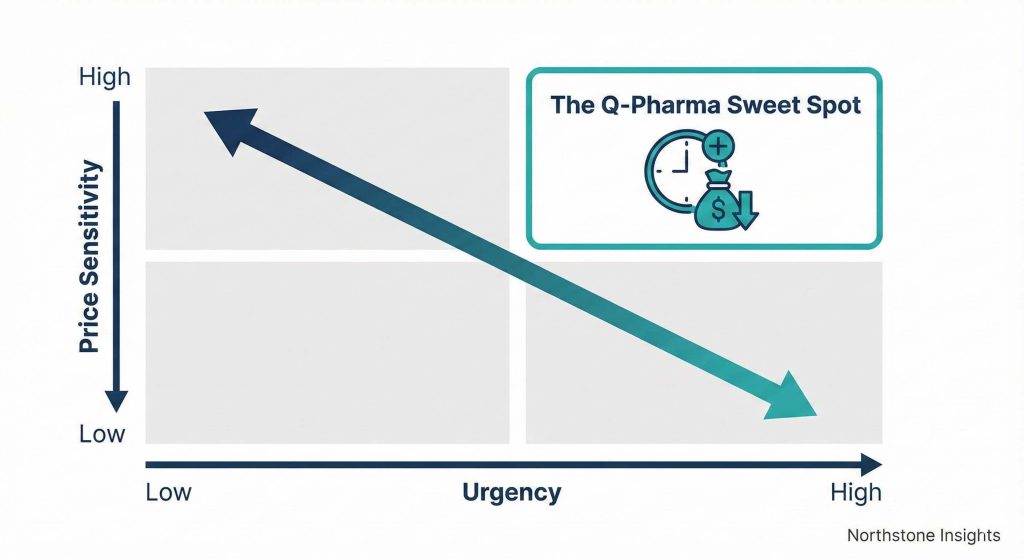
When someone orders a pizza, they are hungry. When someone orders baby fever medicine, they are scared. This is a distress purchase. The Panic Brain does not price shop. It value shops for certainty.
Marketing Strategy The Assurance Protocol Your messaging needs to shift from Cheap to Sure. Wrong Ad Copy: “Cheap Paracetamol delivered fast.” Right Ad Copy: “Track your rider in real-time. Paracetamol at your door in 12 minutes.”
The Visuals of Relief Your ad creatives shouldn’t show the product box. They should show the result of the product. Visual: A sleeping baby. A calm mother. Text Overlay: “From fever to asleep in 20 minutes.” This emotional connection is the secret weapon of high converting quick commerce in pharma campaigns.
Paid Acquisition Tactics for Quick Commerce in Pharma
If you are running standard Always On ads, you are burning money. Your ads need to be smart, dynamic, and connected to the real world to succeed in quick commerce in pharma.
Tactic A The API Triggered Pollen Bomb Connect your ad platform like Meta or Google to a Weather API. Trigger: Pollen count hits High. Action: Automatically boost bids on Antihistamine keywords and launch Instagram Reels ads featuring allergy relief bundles. Copy: “Sneezing today? High pollen alert in [City]. Get Zyrtec delivered before you leave the house.”
Tactic B Inventory Aware Ads Nothing kills a brand faster than clicking an ad for Face Masks and finding them out of stock. Use an XML Product Feed that syncs with your Dark Store inventory levels. Rule: If stock is less than 5 items in the user’s zip code, Pause Ad. Rule: If stock is greater than 50 items, Increase Ad Spend.
This is Programmatic Commerce. It ensures every dollar spent drives a user to a product they can actually buy now. This inventory awareness is critical for efficiency in quick commerce in pharma.
App Store Optimization ASO for Quick Commerce in Pharma Apps
Most quick commerce in pharma transactions happen in app. Your battleground is the Apple App Store and Google Play Store.
The Title Tag Hack Your app name is the most significant ranking factor. Brand Only: “MediFast” Optimized: “MediFast: 24/7 Pharmacy Delivery”
The Social Proof Screenshots Don’t just show the app interface. Show the experience. Screenshot 1: A map showing a rider getting closer. Caption: Real time Tracking. Screenshot 2: A pharmacist chat window. Caption: Ask a Pharmacist. Screenshot 3: A 15 Minute timer. Caption: Ultra Fast Delivery.
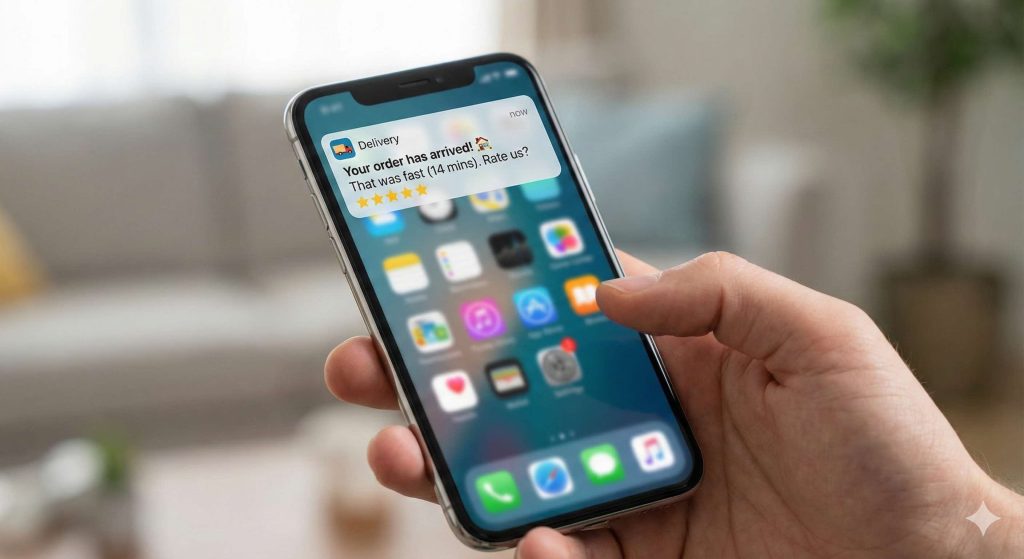
The Ratings Prompt Strategy You need 5 star reviews to rank. But don’t ask for a review right after the order is placed. Ask right after delivery. Trigger a push notification 2 minutes after the rider marks Delivered. Copy: “Fast enough? ⚡️ Rate your delivery experience.”
Retention Loops and the Medicine Cabinet Methodology
Acquisition in quick commerce in pharma is expensive because CAC is high. Profitability comes from Retention or LTV. You need to turn a Distress Customer who buys in an emergency into a Routine Customer who buys via subscription.
The Digital Medicine Cabinet Feature Create a feature in the app where users can list the meds they take regularly. Utility: The app tracks when they should be running low. Trigger: “Your Zinc supplements should be running low. Restock now for tomorrow morning?”
The Subscription Lite Model Amazon has Subscribe and Save. You can do Predict and Save. You don’t force them into a contract. You just use AI to predict their need. SMS: “Hey Sarah, it’s been 28 days since your last order of Probiotics. Reply ‘YES’ to reorder. Delivered in 30 mins.”
SMS Marketing The Unsung Hero Email has a 20% open rate. SMS has a 98% open rate. For quick commerce in pharma, SMS is king. Use Case: Flash Sales on short expiry items. “50% off Protein Bars (Expiring soon). 1 hour only.”
Surviving the Super App Threat in Quick Commerce in Pharma
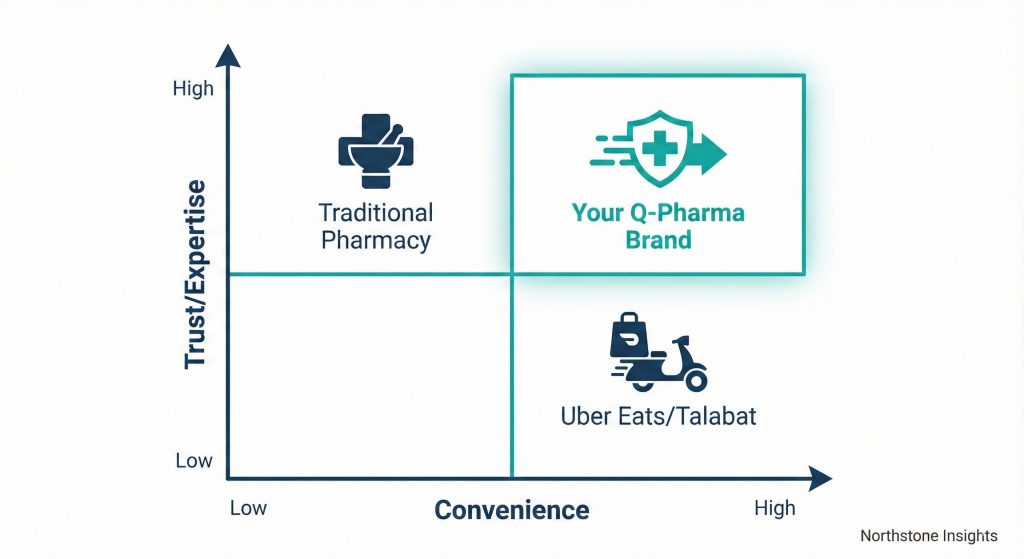
Here is the elephant in the room. Why should a user download your app when they can just buy Panadol on Uber Eats or Talabat? The aggregators like Uber, DoorDash, and Talabat have massive traffic. You cannot beat them on traffic. You beat them on EXPERTISE.
The Pharmacist in the Loop Advantage Uber Eats cannot give medical advice. You can. Feature: Chat with a Pharmacist. Marketing Angle: “Don’t guess with your health. Ask a real doctor before you order.”
The Cold Chain Trust Aggregators deliver burgers and medicine in the same backpack. That is a risk for sensitive items like Probiotics, Insulin, or Creams. Marketing Angle: “We are a PHARMACY, not a food delivery app. Our riders use temperature controlled medical grade boxes. Your medicine arrives safe.”
The Insurance Integration This is the moat. If you can integrate insurance co pay into your app, you win. Aggregators struggle with this. USP: “Pay with Insurance. Only pay the co pay.” These trust signals are how specialist quick commerce in pharma brands survive against the giants.
Future Trends Drones AI Prediction and Tele Prescriptions
To be a Northstone Level leader, you need to look at 2027 and beyond for quick commerce in pharma.
1 Drone Delivery The Rural Solution In dense cities, scooters win. In suburbs, drones will win. Regulations are opening up. Imagine marketing: “Air dropped to your backyard in 8 minutes.”
2 Predictive Shipping AI analyzes a user’s purchase history plus local flu data. Prediction: “This household usually buys flu meds 3 days after the local school reports an outbreak.” Action: Pre position stock in the nearest Dark Store.
3 Tele Consultation Integration The app of the future isn’t just a store; it is a clinic. Flow: User has a rash. Uploads photo to App. AI or Doctor diagnoses. Prescribes Cream. Cream delivered in 20 mins. Result: End to end healthcare in under 30 minutes.
Conclusion The Next Hour Standard in Healthcare
The train has left the station. The patient who has experienced the magic of having a fever reducer delivered to their door in 18 minutes will never go back to driving to the store while sick. The standard for quick commerce in pharma has been set.
But winning in quick commerce in pharma isn’t just about hiring fast riders. It is about: Operations positioning stock where the people are using Dark Stores. Economics bundling products to save margins. Psychology marketing Relief and Certainty, not just products. Technology using hyper local SEO and API triggered ads.
The pharmacies that treat Time as their most valuable product will own the patient relationship in the next decade. Those that don’t will just be warehouses for Amazon.
Your 3 Step Start Audit Your Near Me Presence by creating 5 neighborhood specific landing pages this week. Launch a Bundle like a Flu Kit or New Mom Kit and put it on your homepage. Test SMS by sending one Replenishment Reminder SMS to customers who bought vitamins 30 days ago.
This analysis is part of Northstone Insights ongoing research into the evolving dynamics of the digital pharmaceutical supply chain. Our reports combine data, strategy, and field intelligence to guide organizations toward higher ROI and sustainable growth. For tailored research, benchmarking, or strategic advisory support, contact the Northstone Insights team.


Leave a Comment