

If you feel like your e-commerce attribution is more confusing than ever, you’re not alone.
Every store owner has the same complaint:
“Where are my sales actually coming from?”
And honestly? They’re right to ask.
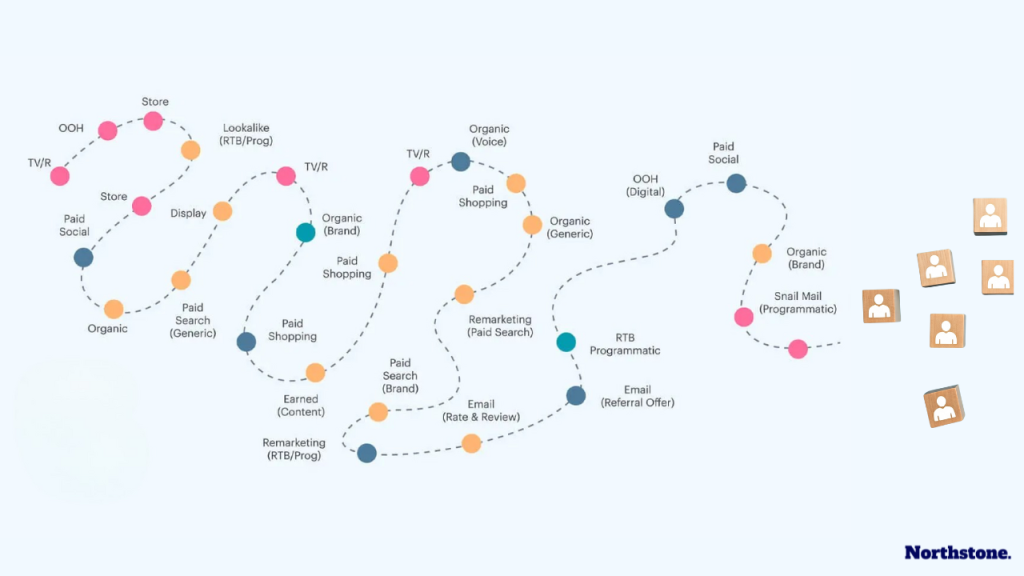
Between iOS privacy updates, signal loss, fragmented tracking, and multi-platform journeys, attribution has become a guessing game for many online stores.
But here’s the thing: attribution hasn’t died.
It has evolved.
And the brands winning in 2026 aren’t the ones with the fanciest dashboards…
They’re the ones who understand how real shoppers behave across their customer journey and use attribution the smart way not the perfect way.
At Northstone Insights, we’ve helped e-commerce brands from Shopify to Amazon sellers recover lost signals, connect fragmented user journeys, and scale profitably by using attribution frameworks that actually work in the real world.
This guide breaks down the 7 proven ecommerce marketing attribution tactics our best-performing clients rely on, battle-tested, platform-ready, and iOS-proof.
Let’s get into it.
Why Ecommerce Marketing Attribution Still Matters in 2026
You already know multiple touchpoints shape a purchase.
But what many brands forget is this:
Attribution isn’t about accuracy, it’s about direction.
Because the reality is:
- You will never get perfect cross-platform tracking again.
- But you can absolutely get actionable attribution that improves your decisions.
Here’s what we’ve learned working with dozens of e-commerce brands:
Attribution helps you clarify:
- Which channels actually drive profitable customers
- Which campaigns are overvalued by ad platforms
- Which ads are stealing credit (PPC cannibalization is real)
- How much money you’re wasting on cold audiences
- Whether you’re scaling revenue or just buying vanity metrics
And with rising acquisition costs:
Attribution is no longer optional.
It’s the only way to scale without blowing your margins.
The Attribution Crisis: What Changed After iOS + Tracking Loss
If your numbers suddenly stopped making sense after iOS 14.5, here’s why:
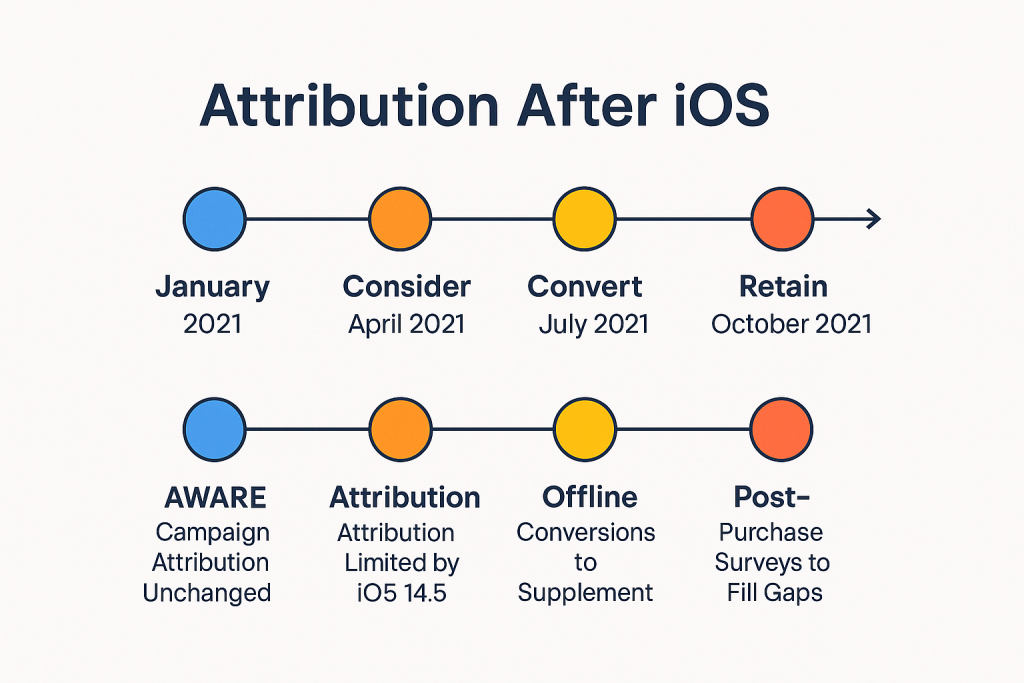
Signal Loss
Meta and TikTok lost visibility into:
- Add to carts
- View content
- Purchases
- Custom events
This means you’re probably under-reporting conversions.
Conversion Window Reduction
Attribution windows shrunk.
Your 28-day view? Gone.
7-day click? Now the default.
Cross-device Tracking Breaks
Users bounce between:
- Instagram → Google → Email → Website
- TikTok → Google → WhatsApp → Website
- Amazon → Meta → Brand site → Checkout
And each platform claims credit.
The Bottom Line:
If you’re still relying on single-platform attribution (Meta Ads Manager, Google Ads, TikTok Ads), you’re seeing just one slice of the pie.
That’s why smarter attribution systems are essential in 2026.
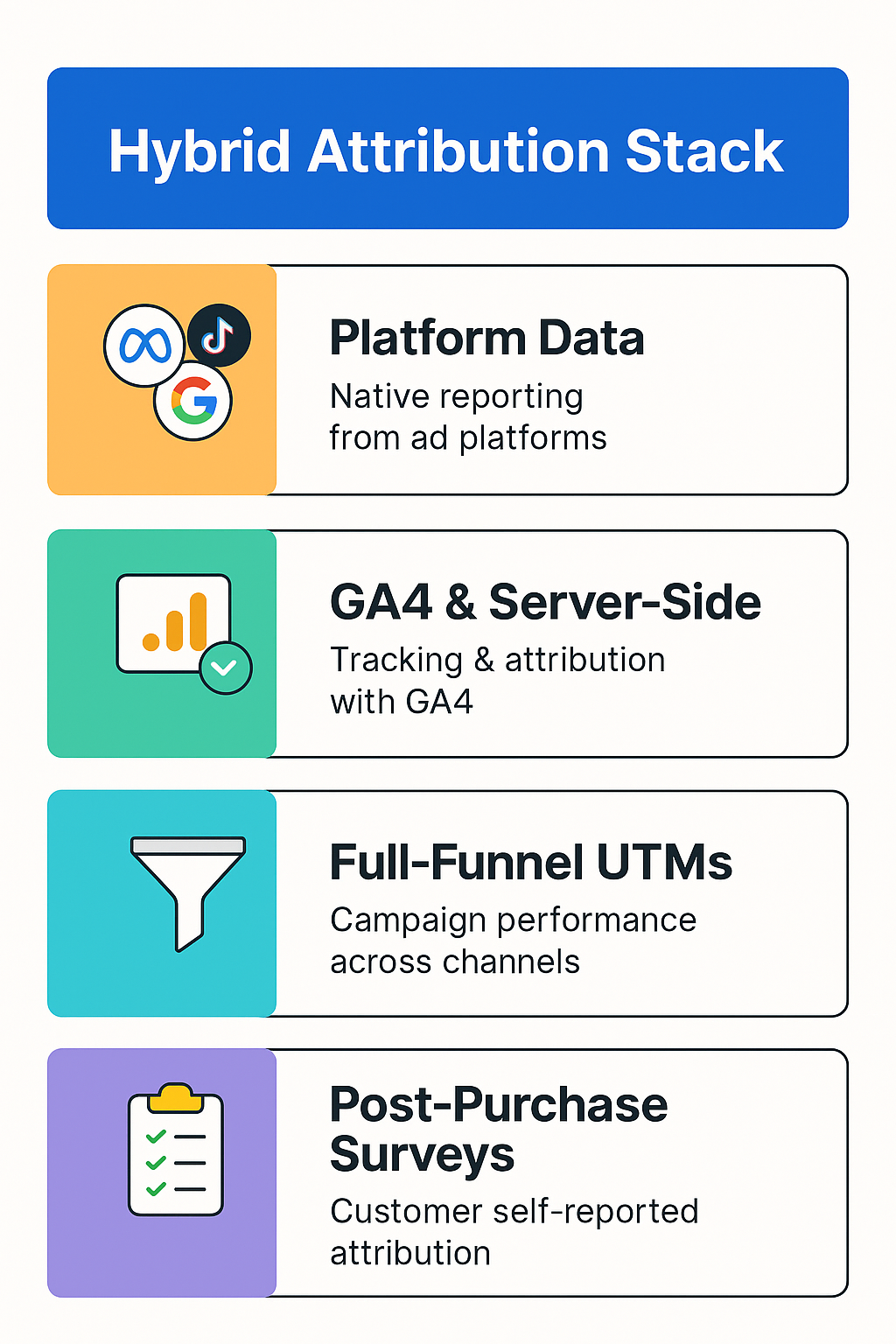
- Use a Hybrid Attribution Model (Our Proven Framework)
This is the exact model we use at Northstone Insights for every e-commerce brand:
We combine:
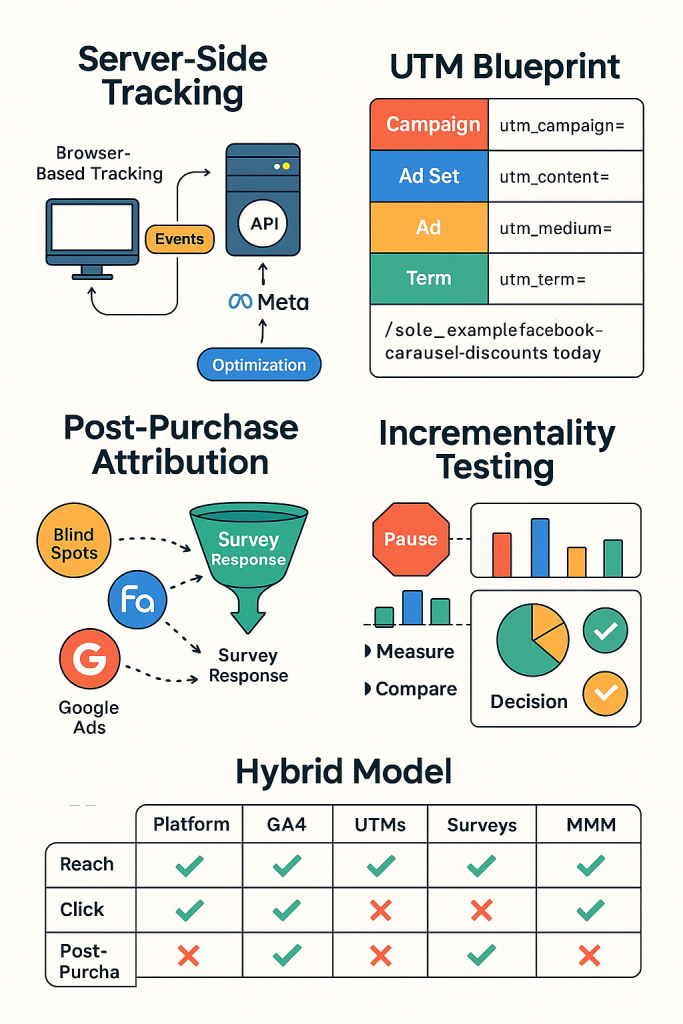
- Platform attribution (Meta, Google, TikTok)
- First-party analytics (GA4, server-side tracking)
- Self-attribution (post-purchase surveys, UTMs)
- MMM-style directional data (lightweight media mix modeling)
Think about it this way:
Instead of relying on one broken system, you merge the strengths of all systems to see the truth in between.
Our Hybrid Model Breaks Down Like This:
| Data Source | What It Tells You | Strength |
| Meta/TikTok Attribution | What the platform thinks it drove | Useful for scaling creatives |
| GA4 | Only what it can observe via last-click | Good for purchase journeys |
| Post-Purchase Surveys | Real human signal | Best for multi-touch |
| UTM Structure | Full funnel mapping | Critical for accuracy |
| MMM Directional Trends | Budget > outcome correlations | Useful for forecasting |
Why it works
You’re no longer looking for accuracy.
You’re looking for confidence in decision-making.
And this hybrid model consistently improves ROAS and reduces wasted spending for our clients.
2. Rebuild Your Tracking With Conversion APIs (CAPI)
If you want to fix attribution, you need to fix signals.
Full stop.
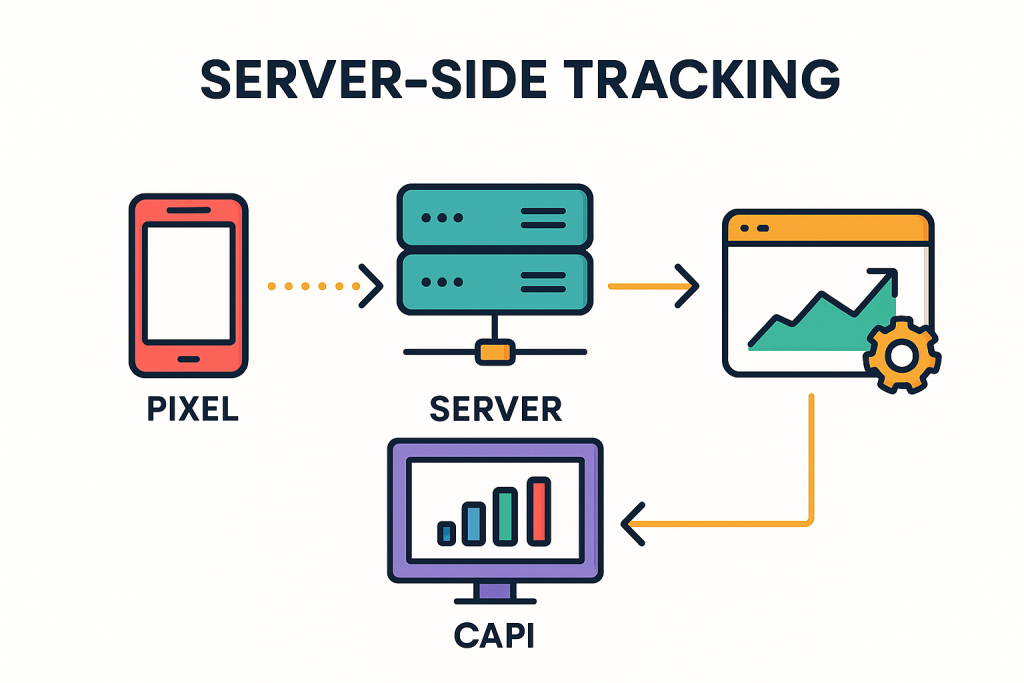
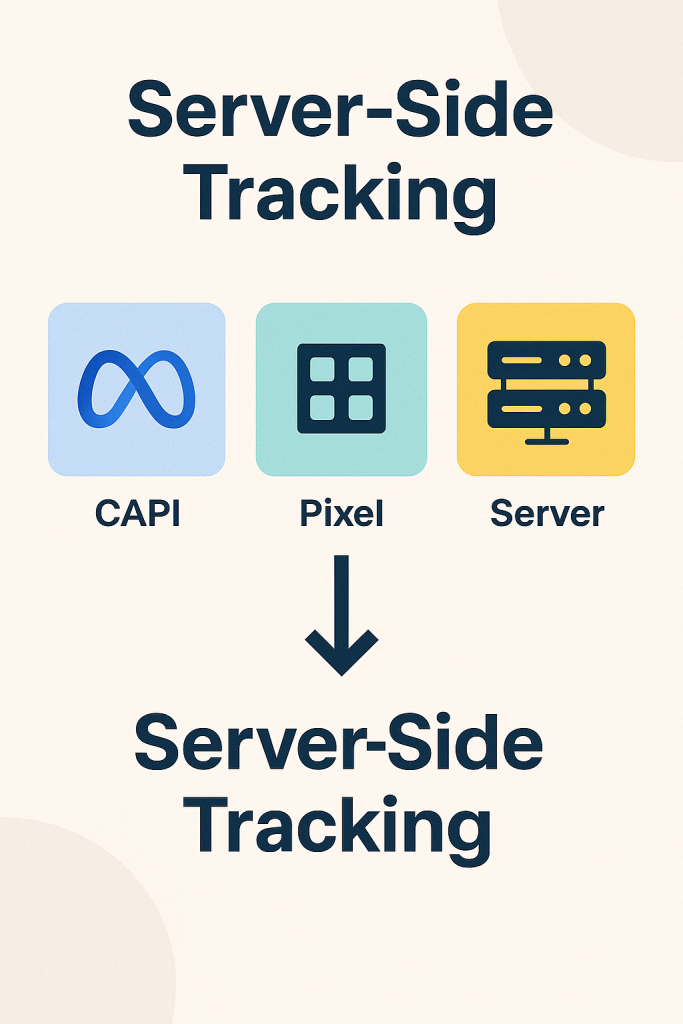
Platforms where CAPI or server-side tracking is now essential:
- Meta
- TikTok
- Google Enhanced Conversions
- Snapchat
Why CAPI matters in 2026:
- Recovers up to 20–30% lost conversions
- Sends hashed first-party data
- Improves optimization (the real magic)
- Reduces dependency on browser tracking
- Boosts signal quality for machine learning
In practice, our clients usually see:
- 12–18% lower CPA
- 21–44% more attributed conversions
- Better retargeting pool quality
- More stable delivery
Quick Implementation Stack
- Shopify + Elevar
- WooCommerce + GTM Server-Side
- Meta CAPI Gateway
- TikTok Events API
- Stape (server-side tagging)
Here’s the truth most agencies won’t tell you:
Fixing tracking gives more results than launching new campaigns.
3. Build a Clean UTM Structure (Most Stores Get This Wrong)
We’ve audited hundreds of accounts.
90% had broken UTMs or none at all.
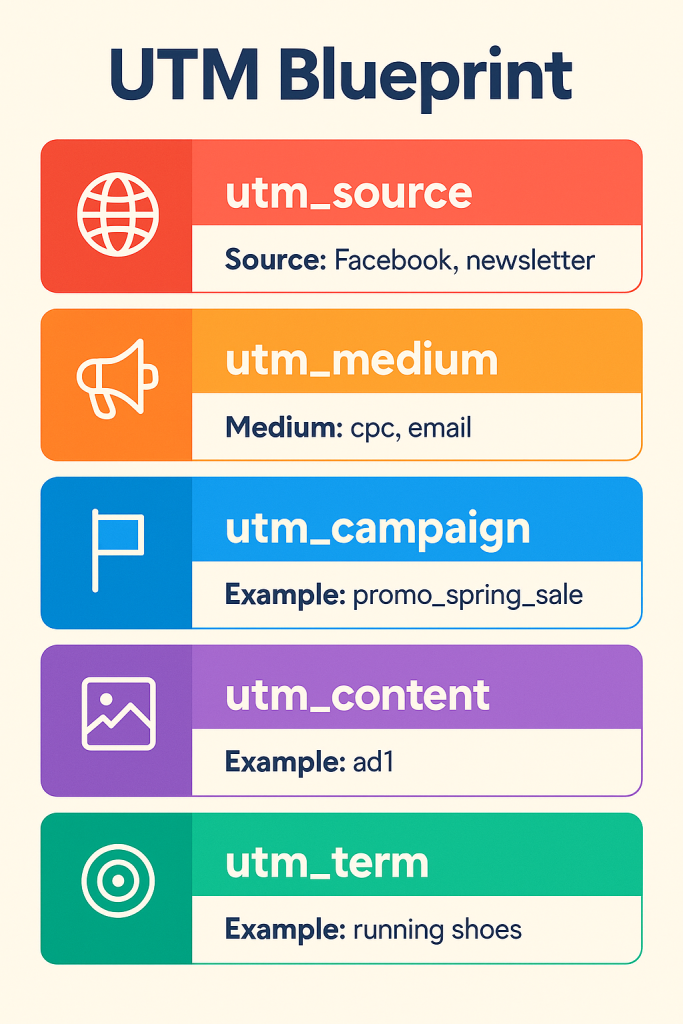
A clean UTM structure gives you:
- Full clarity on campaign → ad set → ad → click → session → purchase
- Cleaner GA4 reports
- Precise cross-channel analysis
- Better attribution mapping
Northstone’s Recommended UTM Format:
utm_source=facebook
utm_medium=paid_social
utm_campaign={{campaign.name}}
utm_content={{ad.name}}
utm_term={{adset.name}}
Why this matters
You can’t analyze what you can’t measure.
UTMs force discipline into your data.
4. Use Post-Purchase Attribution (Customers Reveal the Truth)
This is the most underrated attribution method in e-commerce.
Ask one simple question:
“How did you first hear about us?”
Best-performing options for attribution:
- TikTok
- Google Search
- Friend/Referral
- Influencer
- YouTube
- Email/SMS
- Marketplace (Amazon, Noon, etc.)
Why this works so well
Customers will tell you what no platform can see:
- They watched your TikTok three times
- Googled your brand
- Saw a retargeting ad
- Clicked from an email
- Purchased on Shopify
This captures multi-touch reality.
Our clients often see attribution shifts like:
- Meta reports 40%
- Google reports 30%
- Surveys show Meta actually drives 65%
That’s the power of qualitative attribution.
5. Use a Multi-Touch Attribution (MTA) Simple Model When Needed
Unlike enterprise MTA systems, most stores only need a lightweight version.
Northstone’s Lite MTA Model
We allocate credit like this:
- 40% to first touch (awareness)
- 40% to last touch (conversion)
- 20% to assist touch (middle of funnel)
Why this works
You reward both:
- The ad that built intent
- The ad that closed the sale
For stores spending $10K–$200K/month, this is the sweet spot.
6. Use GA4 the Right Way (Most People Misread It)
GA4 is not an attribution tool.
GA4 is a behavioral analysis tool.
And that’s exactly how you should use it.
Use GA4 For:
- Landing page performance
- Add-to-cart rates
- Checkout funnel drop-offs
- Coupon usage patterns
- Cart abandonment metrics
Do NOT use GA4 for:
- Media mix attribution
- Channel weighting
- ROAS decisions
GA4 will always over-credit:
- Direct
- Organic
- Brand search
Why?
Because it only measures what it can physically observe.
7. Build a Cross-Channel Incrementality Framework
Incrementality is the “holy grail” of attribution.
It tells you the only question that truly matters:
“What would happen if we turned this channel off?”
Northstone’s Incrementality Playbook:
- Pick a channel (Meta, Google, TikTok)
- Pick a segment (prospecting or retargeting)
- Reduce budget by 20–40% for 7 days
- Track:
- Revenue
- Unique sessions
- Repeat purchases
- CAC
- ROAS
- Identify the delta
What you learn
Some channels are inflating their value.
Others are silently driving most of your revenue.
We’ve helped brands discover:
- Google Search was cannibalizing Meta traffic
- TikTok was driving brand search on Google
- Email was over-reporting repeat purchases
- “Organic social” was really dark social from WhatsApp
This is where the clarity comes from.
Attribution Fixes That Immediately Increase Revenue
Here are some things you can do today:
1. Optimize Your Conversion Events
- Standardize ViewContent
- Fire ATC only when meaningful
- Fix Purchase event value consistency
- Track Subscription events separately
2. Add Whitelisted Influencer Pages
Better attribution + higher social proof.
3. Create a Paid Brand Search Strategy
Protects margin + filters competitor bidding.
4. Build a Dark Social Strategy
Track WhatsApp shares with custom events.
5. Rebuild Retargeting After iOS
Focus on:
- 30-day engaged visitors
- High-intent scroll depth
- Add to carts with >20s page time
These changes alone can increase ROAS by 25–50%.
Real-World Examples From Northstone Clients
Client Example 1: Shopify Brand (Beauty)
Problem: Meta under-reporting 40% of sales
Fix:
- CAPI Gateway
- Post-purchase attribution
- UTM clean-up
Outcome: - 31% increase in attributed conversions
- CAC dropped from AED 51 → AED 34
Client Example 2: Amazon Seller Expanding to Shopify
Problem: No clarity on brand vs non-brand traffic
Fix:
- MMM directional modeling
- GA4 assisted conversions
Outcome: - Reduced wasted spend on generic PPC
- Increased blended ROAS from 2.1X → 3.4X
Client Example 3: High-Volume DTC Brand
Problem: Rising CPCs and poor signal quality
Fix:
- Improved event quality
- Cross-channel incrementality test
Outcome: - Dropped CPA by 18%
- Improved repeat purchase rate by 22%
Summary: The Only Attribution Strategy That Works in 2026
Here’s the truth:
There is no perfect attribution model.
But there is a perfect approach: the Hybrid Attribution System.
If you want to scale in 2026:
- Fix your tracking
- Use CAPI server-side
- Clean your UTMs
- Collect customer feedback
- Combine platform + survey + GA4 + MMM
- Test incrementality
- And always evaluate decisions on blended metrics
Attribution isn’t about chasing accuracy.
It’s about making smarter decisions.
FAQ: Ecommerce Marketing Attribution (2026)
1. What is ecommerce attribution?
It’s the process of identifying which channels influence a customer’s purchase journey.
2. Does attribution even work after iOS updates?
Yes, but only when you use first-party data, CAPI, and hybrid attribution models.
3. What’s the best attribution tool for Shopify?
For most brands:
- GA4
- Elevar
- Triple Whale
- Northbeam
- Post-purchase attribution surveys
4. Should you rely on Meta or GA4 numbers?
Neither alone.
Use blended + hybrid attribution instead.
5. How do I know which channel drives profitability?
Run incrementality tests, they reveal the truth very quickly.
This analysis is part of Northstone Insights’ ongoing research into the evolving dynamics of e-commerce marketing and customer acquisition. Our reports combine data, strategy, and market intelligence to guide organizations toward higher ROI, conversion optimization, and brand authority. For tailored research, benchmarking, or strategic advisory support, contact the Northstone Insights team.


Leave a Comment